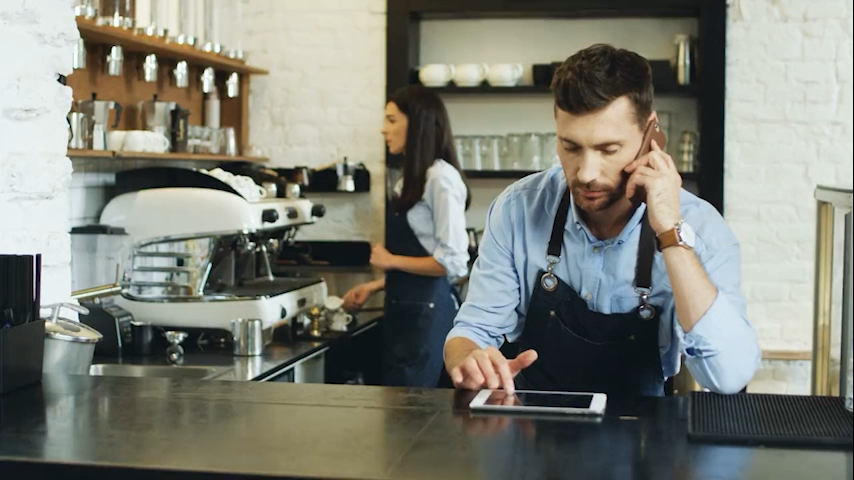
Opening a great café
and running
one are entirely different skills.
Most operators get the craft right — the atmosphere, the menu, the ritual. What breaks them at scale is everything that happens before a guest walks in: sourcing, staffing, systems, and the invisible operations holding it all together.
A perspective for operators building durable, scalable café businesses
A great café requires six things to work in concert — and each one scales differently.
Most operators discover this mismatch only after they have committed to a growth trajectory they cannot easily reverse. The challenge is not opening a second location. It is building a business that survives the third, the tenth, and the fiftieth.
“The gap between a great café and a great café business is almost entirely an operational one.”
Already navigating these challenges?
Speak with someone who has worked with multi-site café operators at every stage of growth — from two locations to two hundred.
Where most café businesses actually lose ground
Five operational domains where the gap between ambition and execution quietly widens — and why most operators do not notice until it is expensive to fix.

Operations fracture as you open more locations
Each new site introduces new variables — different staff, different interpretations of your SOP, different local workarounds. Without a centralised operating layer, "standardisation" is a document in a folder, not a reality in the business.
- No single source of truth across locations — each site effectively runs its own version of the business
- Manual shift handover processes introduce errors that compound across hundreds of weekly transitions
- POS and kitchen display systems operating in isolation, creating friction between front-of-house and preparation
- Technology migrations that should take days stretch to weeks, disrupting service with no operational benefit
- Deploying consistent systems across 20 new sites simultaneously remains an unsolved problem for most growing operators

Inventory leakage erodes margin before it appears on the P&L
Hospitality operates on tight margins. Ingredient waste, over-ordering, recipe deviation, and pilferage do not announce themselves — they accumulate silently across every site, and most operators only encounter the full picture at month-end.
- No real-time visibility into site-level stock positions — information arrives too late to act on
- Recipe adherence is impossible to enforce remotely without digital tracking at the ingredient level
- Supplier pricing inconsistency across regions goes undetected without centralised procurement data
- Manual stock counts consume operations hours that should be directed toward guests and team development
- No automatic reorder logic by site — purchasing remains reactive rather than systematic
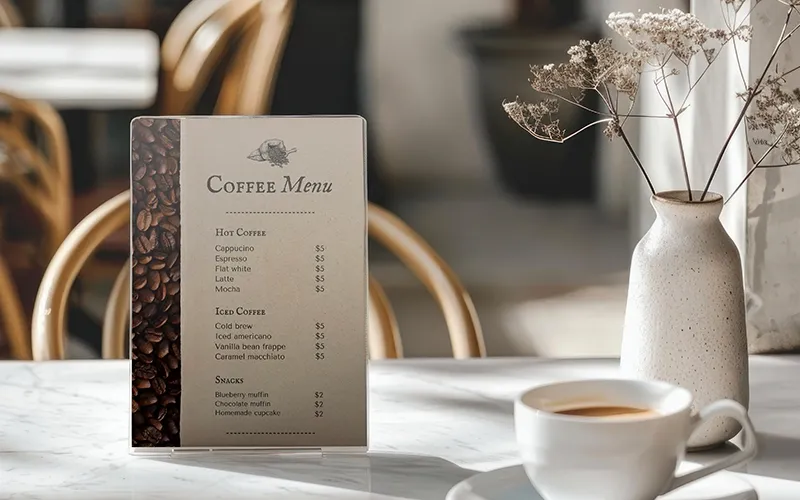
Menu control becomes a coordination problem at scale
Head office wants standardisation. Site managers want local flexibility. Delivery platforms want their own feeds. The result — across most growing operators — is multiple versions of the menu in circulation simultaneously, none of them fully authoritative.
- Menu changes require individual manual updates across every delivery platform — a process that takes days and introduces errors
- Price inconsistencies between dine-in, delivery, and takeaway channels erode margin and erode guest trust
- No central control mechanism for seasonal specials or limited-time items across the estate
- Delivery platform menus drift out of sync the moment a POS change is made
- Loyalty and app integrations require bespoke menu data mapping for each new tech partner

Business decisions get made on yesterday’s numbers
When every location runs a different system, central reporting is not analysis — it is reconciliation. Leadership teams routinely spend more time validating data than acting on it, which means the insights that should drive decisions are always a step behind.
- No live dashboard surfacing estate-wide performance — visibility requires manually exporting and merging multiple sources
- Delivery platform transaction data reconciled against POS by hand — slow, error-prone, and chronically behind
- Sales trend visibility lagging by days, making intra-week course corrections impossible
- No site-versus-site benchmarking — underperformance is not identified until it becomes an established pattern
- Third-party data intermediaries create structural fragility — when they fail or exit, the entire reporting layer goes with them
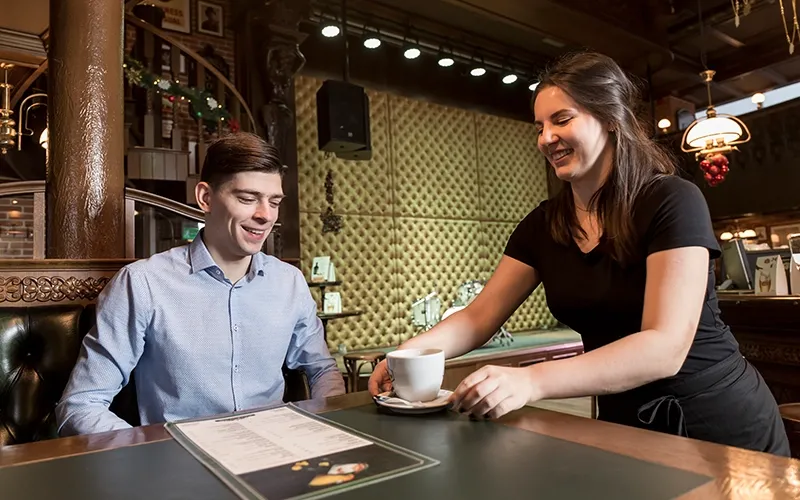
The guest experience diverges from the brand promise
Brand consistency in marketing is table stakes. What guests actually experience is operational consistency — and when loyalty points do not follow them across locations, when app orders bypass the preparation queue, when wait times vary by thirty seconds from site to site, they notice without always saying so.
- Loyalty programmes operating in channel silos — points and rewards do not follow guests across touchpoints or locations
- App orders not appearing on kitchen display systems in real time, creating queue confusion and extended wait times
- QR and barcode scanning for loyalty not natively supported, requiring middleware that introduces latency and failure points
- Queue and capacity management reactive rather than predictive — staffing decisions made too late to improve the guest experience
- No site-level guest satisfaction data connected to operational metrics — impossible to trace experience gaps to their actual root cause
For every structural challenge, there is a precise operational fix.
The distinction between café businesses that scale well and those that plateau is rarely about the quality of the product or the strength of the brand. It is almost always about the quality of the operating infrastructure beneath it — and whether that infrastructure was designed to grow.
Operational inconsistency across sites. Every location interpreting SOPs differently, no real-time visibility for head office, no enforcement mechanism that scales with the number of locations.
A unified POS and kitchen display stack that enforces standardised workflows across every site simultaneously — giving head office live visibility without requiring daily reporting calls.
Invisible inventory leakage. Waste, recipe deviation, and over-ordering compounding across the estate with no real-time signal — damage only visible after the fact.
Recipe-based inventory depletion tracking that flags variance in real time — paired with automatic reorder logic and multi-supplier cost comparison across regions.
Menu fragmentation across platforms. Delivery apps, loyalty integrations, and POS running different versions of the menu — pricing drifting, authority unclear.
Centralised menu architecture that pushes updates simultaneously to every site and every platform — with API-first design that integrates loyalty apps without custom engineering.
Reporting lag and data fragmentation. No live estate view, decisions made on manually compiled exports, reconciliation consuming the hours that should go to analysis.
Direct platform-to-operator data flows — no intermediaries — surfacing live site benchmarking and decision-ready dashboards without manual compilation or delay.
Multi-market complexity at expansion. Different payment standards, regulatory requirements, and hardware per territory — each new market requiring a partial rebuild of what already works.
Infrastructure designed for multi-region from day one. Regional payment standards, compliance frameworks, and local deployment capacity — without hardware replacement when crossing a border.
Ready to see how this maps to your business specifically?
We’ll benchmark your current setup against what the best-performing operators at your scale stage are doing differently.
The 5 decisions that separate café businesses that scale from those that plateau.
Standardise the operating system, not just the menu
A consistent guest experience requires a consistent operating process underneath it. One POS, one kitchen display system, one inventory platform across every site — with no local workarounds permitted. This is not a technology decision. It is a discipline decision that technology makes enforceable. Every team member on the same workflow. Every site manager on the same dashboard. Head office with live visibility — without having to ask for it.
Audit your operating layer →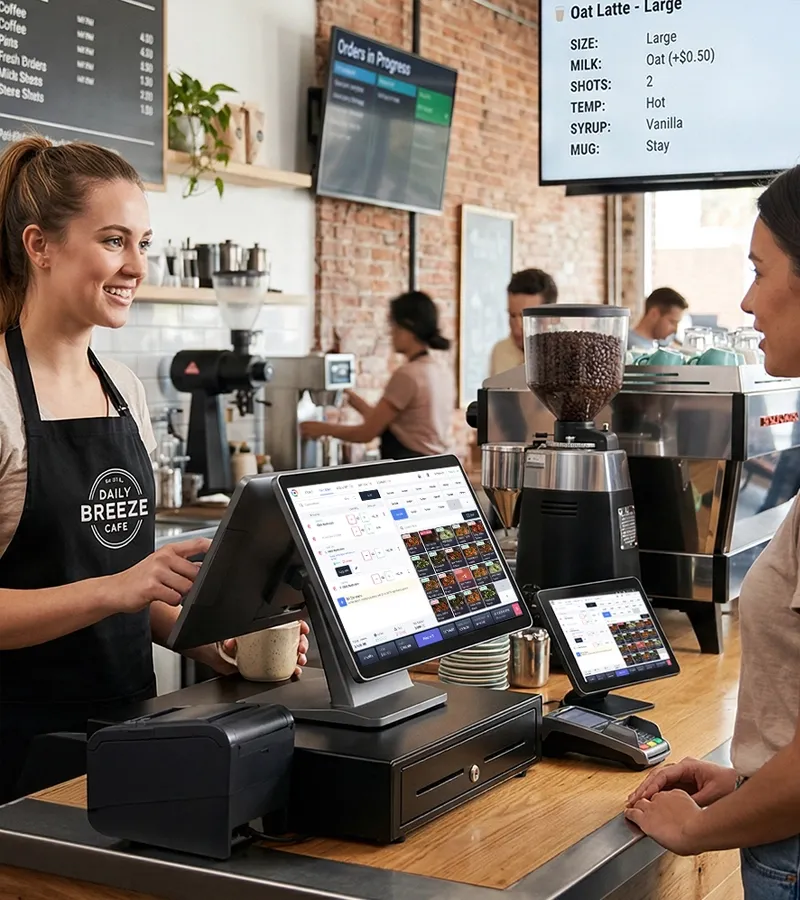
Treat inventory as a revenue lever, not a cost line
The operators who win on margin do not just reduce waste — they use inventory data to optimise purchasing, enforce recipe compliance as a financial control, and identify supplier pricing variance before it compounds across a multi-site portfolio. Recipe depletion tracking. Automatic reorder triggers. Cost variance alerts — visible in real time, not at month-end when the damage is done.
Map your margin leaks →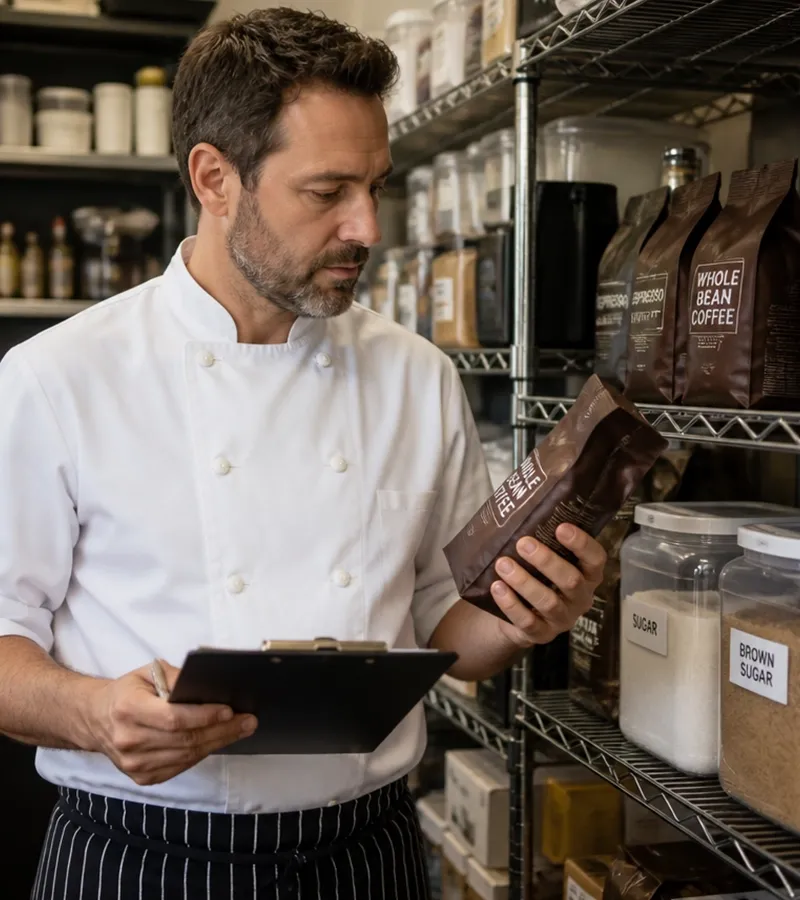
Own your platform relationships — do not be owned by them
Delivery platforms are a distribution channel. Operators who cede menu authority, guest data, and pricing control to aggregators are building someone else’s business as much as their own. The distinction between a channel and a dependency is structural — and it compounds over time. Direct integrations. Menu ownership with head office. No reliance on data intermediaries that can change terms or exit without notice.
Review your aggregator setup →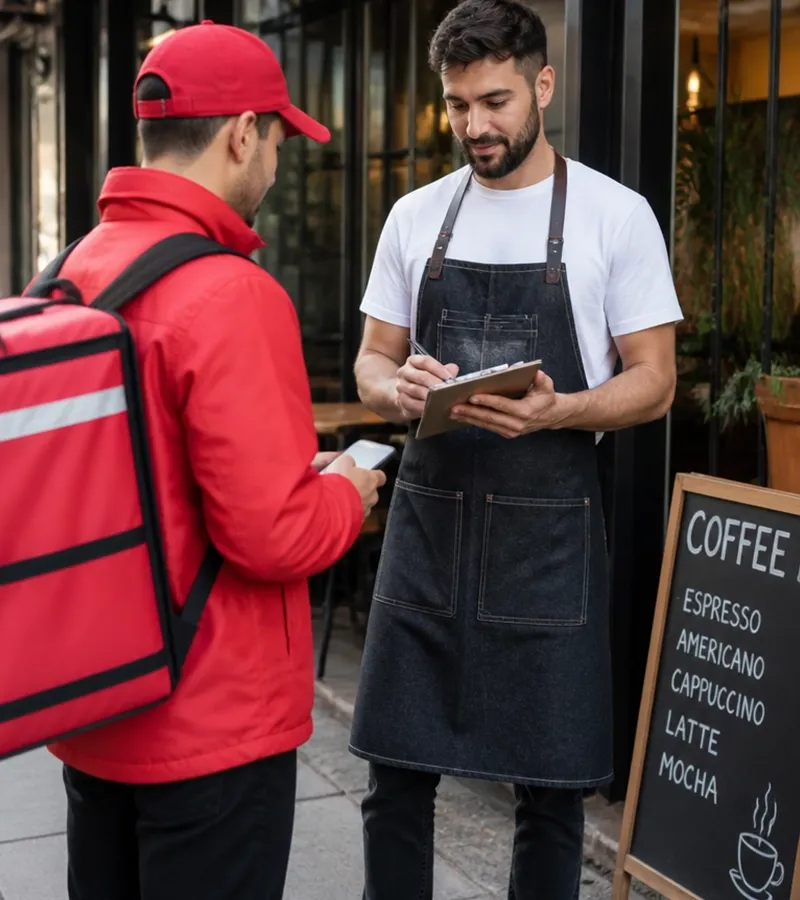
Build loyalty infrastructure before the guest demand for it appears
Operators who defer loyalty infrastructure until scale forces the issue find themselves engineering it retroactively — at significantly greater cost and disruption. An API-ready technology stack from the outset makes loyalty programmes, mobile apps, and CRM integration a solved problem rather than a multi-year project. Open APIs from day one. Native barcode and QR scanning. App orders routed directly to the kitchen without middleware dependencies.
Plan your loyalty stack →
Design for the market you are entering, not just the one you are in
Expansion into new territories exposes every assumption built into a domestic technology stack. Multi-region compliance, multi-currency operations, and in-country deployment support are not features to be retrofitted — they are the prerequisite for operating at scale in markets where the regulatory and payments landscape differs from home. Payment and compliance frameworks built in. Dedicated in-country deployment support. No hardware replacement required when entering a new market.
Scope your expansion stack →
Further reading for operators who think.

How to Start a Vegan Cafe: Tips, Strategies & Growth Guide
In an era where consumers vote with their wallets for a better planet, vegan cafes represent more than a food trend; they’re cultural catalysts. This comprehensive guide will navigate you through the exciting journey of launching your own vegan cafe empire.
Read article →
Smart Cafe Floor Plan Design Ideas: Layout Tips for Small Cafes & Coffee Shops
Opening a coffee shop starts with the right floor plan. Your layout determines everything from customer flow to employee efficiency.
Read article →
Healthy Cafes Trend: How Wellness is Reshaping the Café Industry
This healthy cafes trend represents more than a passing fad. It reflects a broader change in how people decide what to eat and how they experience dining.
Read article →A conversation, not a demonstration. There’s a difference.
We will ask about your actual operational challenges — not run you through a feature checklist. The output is an honest diagnostic: where your current setup is working, where it is not, and what operators at your scale have done differently to address it.
Trusted by 25,000+ restaurants across 50+ countries
















































 G2 Leader·4.8★
 Best Restaurant POS·Gartner Digital Markets
 Capterra·4.8★